Card treatment · across 6 sets
Shining Pokemon
Shining Pokemon are secret rares showing a Pokemon in its rare shiny colours. Neo Revelation introduced them in 2001 with Shining Gyarados and Shining Magikarp, Neo Destiny added eight more including Shining Charizard, and Shining Legends revived the idea in 2017 with a new run and three promos.
- Graded market cap
- $306.62M
- Cards
- 21
- every known card
- Sets
- 6
- 2001-2026
- Graded copies
- 134,694
- Share of the market
- 1.99%
The PSA 10 ladder
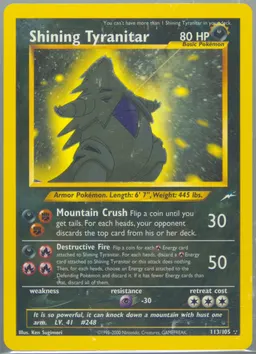
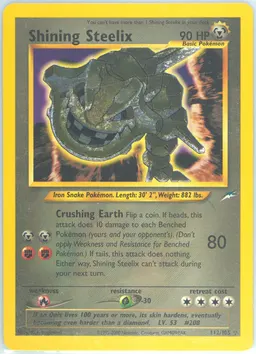
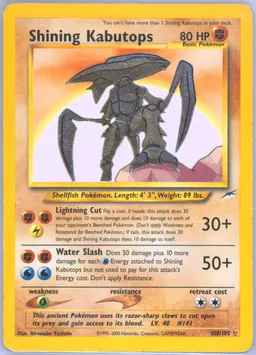
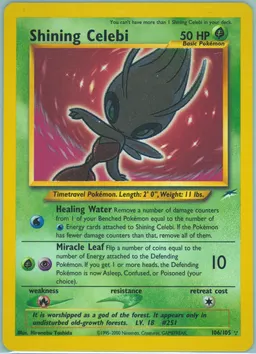
Every Shining Pokemon card by its PSA 10 fair value, top 10 of 21.
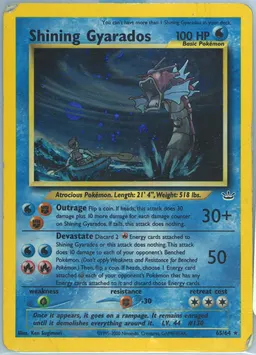
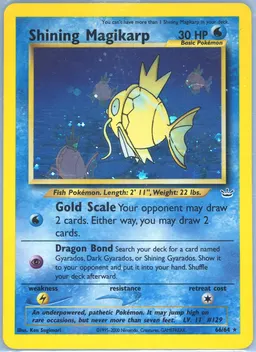
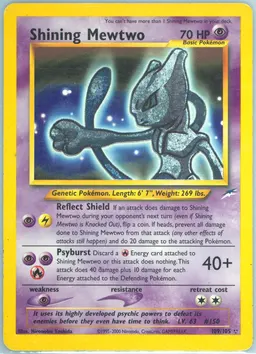
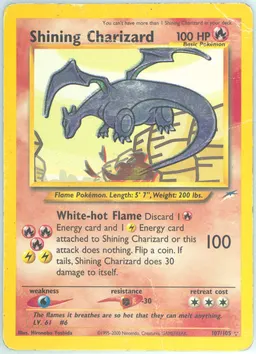
Shining Pokemon indices
Cap-weighted, base 100, one per grade. Only the class's own cards count, from every set that issued one.
Every Shining Pokemon card
Each card stays in the set that issued it. Open one for its prices by grade.
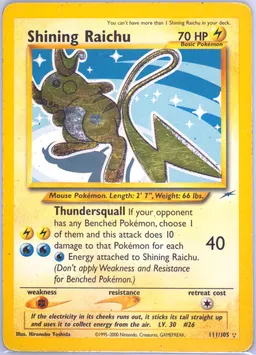
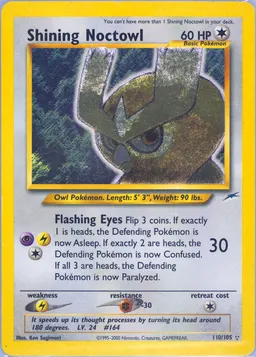
Neo Destiny2002 · 8 cards
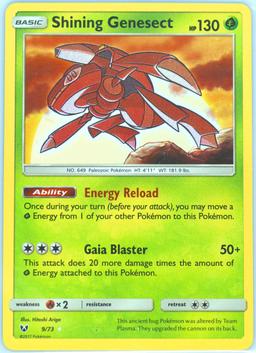
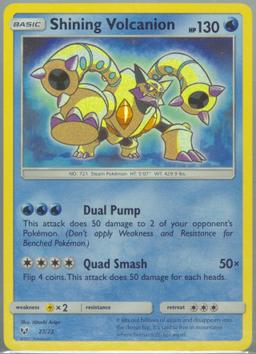
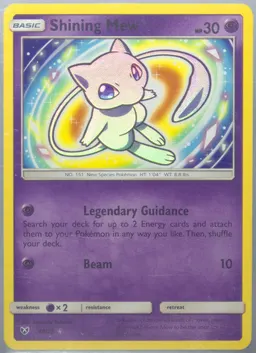
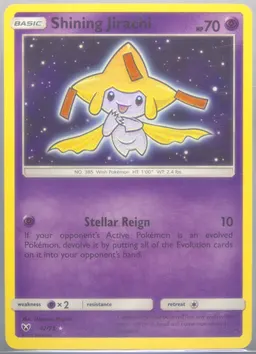
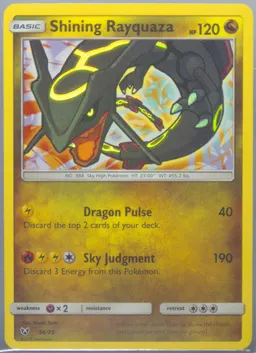
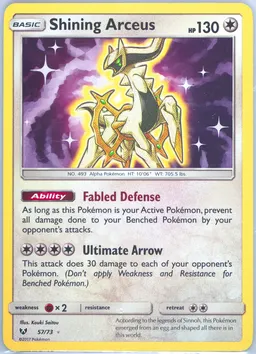
Shining Legends2017 · 6 cards
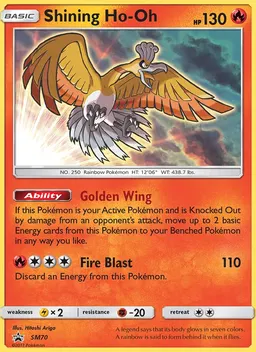
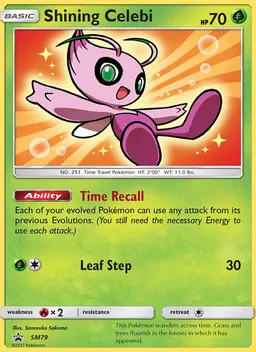
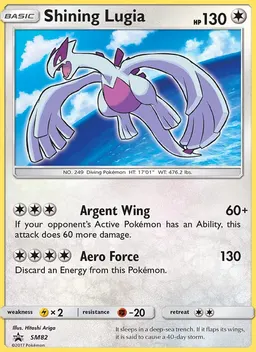
SM Black Star Promos2017 · 3 cards
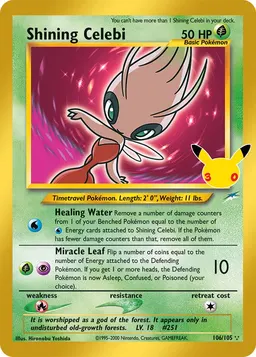
Celebrations2021 · 1 card
Where the value sits
The class's graded market cap, split by card and by the set that issued it.
Which cards carry the class
Share of the graded market cap, across 21 valued cards.
- Shining Charizard22.9%
- Shining Gyarados18.6%
- Shining Mewtwo13.2%
- Shining Magikarp9.8%
- Shining Tyranitar9.3%
- Other26.2%
- Neo Destiny8 cards$191.80M 62.6%
- Neo Revelation2 cards$87.12M 28.4%
- Shining Legends6 cards$16.14M 5.3%
- SM Black Star Promos3 cards$9.77M 3.2%
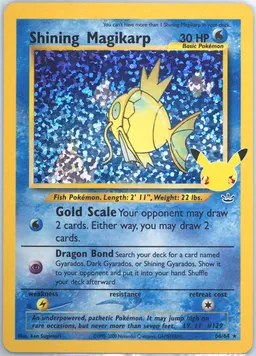
- Celebrations1 card$1.77M 0.6%
- 30th Celebration Classic Collection1 card$17.1K 0.0%
The population
133,522 PSA-graded copies across the class, 33,978 of them PSA 10 (25.4%). The hardest to gem: Shining Magikarp, 196 PSA 10s of 7,899 graded (2.5%).
PSA copies by grade
PSA 6 to 10, the grades we value.
- 34.0k10
- 50.8k9
- 25.1k8
- 12.9k7
- 10.7k6
Grade mix by card
Each card's PSA copies split by grade, most graded card first.
- PSA 10
- PSA 9
- PSA 8
- PSA 7
- PSA 6
- Shining Magikarp Celebrations18,394 graded · 65.4% PSA 10
- Shining Mew Shining Legends11,852 graded · 29.2% PSA 10
- Shining Rayquaza Shining Legends10,408 graded · 29.0% PSA 10
- Shining Ho-Oh SM Black Star Promos9,554 graded · 25.2% PSA 10
- Shining Gyarados Neo Revelation8,383 graded · 2.9% PSA 10
- Shining Magikarp Neo Revelation7,899 graded · 2.5% PSA 10
- Shining Lugia SM Black Star Promos7,451 graded · 11.1% PSA 10
- Shining Arceus Shining Legends6,358 graded · 30.0% PSA 10
- Shining Jirachi Shining Legends6,178 graded · 33.2% PSA 10
- Shining Charizard Neo Destiny5,904 graded · 11.1% PSA 10
- Shining Mewtwo Neo Destiny4,595 graded · 11.7% PSA 10
- Shining Celebi SM Black Star Promos4,572 graded · 14.2% PSA 10
- Shining Genesect Shining Legends4,385 graded · 34.8% PSA 10
- Shining Tyranitar Neo Destiny4,330 graded · 10.1% PSA 10
- Shining Volcanion Shining Legends4,277 graded · 35.1% PSA 10
- Shining Raichu Neo Destiny4,250 graded · 12.1% PSA 10
- Shining Celebi Neo Destiny3,930 graded · 12.3% PSA 10
- Shining Noctowl Neo Destiny3,731 graded · 12.1% PSA 10
- Shining Kabutops Neo Destiny3,649 graded · 15.1% PSA 10
- Shining Steelix Neo Destiny3,362 graded · 14.8% PSA 10
- Shining Celebi 30th Celebration Classic Collection60 graded · 86.7% PSA 10
What the full run costs
One of each, raw Near Mint
$8.5K
16 of 21 cards priced raw
One of each, in PSA 10
$191.2K
18 of 21 cards with a PSA 10 value
How this class is built
- The roster is a reviewed list, card by card, not a name match. A class never moves a card out of its set: each card keeps its one set, its one page and its set's indices.
- Graded market cap is every graded copy of a card at the fair value of its grade, summed over its printings, as of Nov 15, 2026. "One of each" prices every card once, at its main printing.
- How the indices are calculated