Every tracked set with its implied slabbed market cap, fair-value movement, and coverage depth.
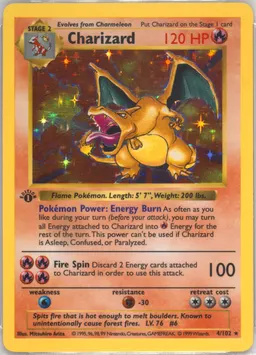
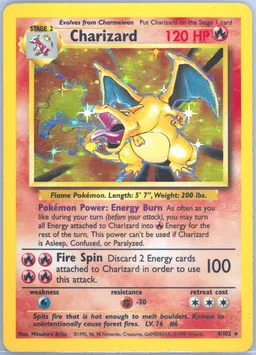
The English-language set that started it all: Wizards of the Coast's 1999 release adapting Japan's first set, home to the iconic Charizard #4/102. Its print runs climb from scarce 1st Edition and Shadowless to Unlimited, which itself splits into 1999 and 1999-2000 Copyright variants, the most chased cards in vintage Pokemon.
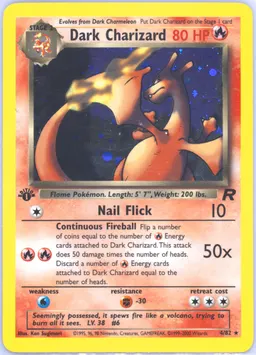
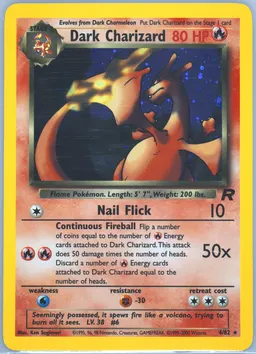
The April 2000 villain-themed expansion introducing 'Dark' Pokemon like Dark Charizard and Dark Blastoise. It debuted the first secret rare in the English game, Dark Raichu (#83), numbered beyond the printed set total.
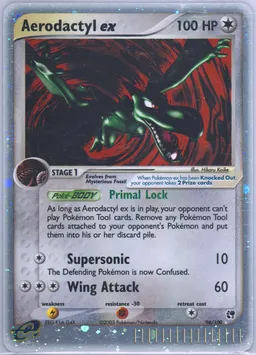
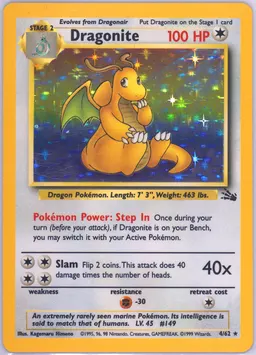
The third English set (October 1999), built around prehistoric and Fossil Pokemon such as Aerodactyl, Kabutops, and Dragonite, plus the legendary birds. The last of the three original Generation I expansions before the reprints began.
The October 2000 conclusion of the two-set Gym series and the final Generation I-themed English WOTC release, headlined by Giovanni's, Sabrina's, and Blaine's Pokemon. Closes out the Kanto Gym Leader storyline with chase cards like Blaine's Charizard.
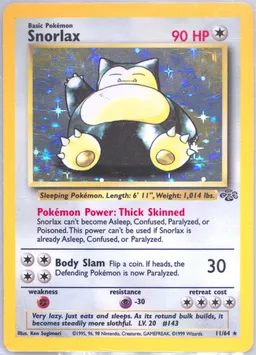
The second English expansion (June 1999), spotlighting Generation I Kanto Pokemon like Snorlax, Scyther, and the Eeveelutions. Early 1st Edition copies were printed without the set symbol, creating the sought-after 'no symbol' error variants.
The August 2000 English opener of the Gym series, featuring Pokemon owned by Kanto Gym Leaders such as Brock, Misty, and Lt. Surge. The first time named trainers appeared on the cards themselves.
A February 2000 English reprint compilation that merged top cards from Base Set and Jungle into one Unlimited-only set. With no 1st Edition run, it is the more accessible way to own classic Generation I artwork.
The 53 Wizards Black Star promotional cards released from 1999 through 2002, including the movie promos, Birthday Pikachu, Ancient Mew and the Pokemon Center cards.
The two English Grey Star promotional cards distributed through Japan's CoroCoro Comic in April 1999. They are separated from the 34 Japanese-language CoroCoro promos so language-specific promo browsing stays accurate.
The first Japanese Pokemon Trading Card Game release (1996), home to vintage No Rarity Symbol (NRS) first prints and the foundational set that preceded all international releases. Charizard and Blastoise command the highest market values, particularly in NRS form.
The 1999 Japanese Gym Expansion 2, Challenge from the Darkness, featuring Pokemon owned by Sabrina, Koga, Blaine, and Giovanni. Its distinct 98-card checklist later contributed cards to the English Gym Challenge expansion.
The Team Rocket / Rocket Gang expansion (1997), the first set featuring Dark Pokemon cards. A defining vintage Japanese set with strong collector demand for high-grade copies.
The third Japanese expansion (1997), built around prehistoric and Fossil Pokemon such as Aerodactyl, Kabutops, and Dragonite, plus the legendary birds. A key set in the vintage Japanese market.
The second Japanese expansion (1997), spotlighting Generation I Kanto Pokemon such as Snorlax, Scyther, and the Eeveelutions. Japanese first edition copies are highly sought alongside their English-market counterparts.
The 1998 Japanese Gym Expansion 1, Leaders' Stadium, featuring Pokemon owned by Brock, Misty, Lt. Surge, and Erika. It has a distinct 96-card checklist and later contributed cards to the English Gym Heroes expansion.
The 35 Japanese-language cards in PSA's current 37-card registry of regular-size Pokemon promos distributed through CoroCoro Comic from November 1996 through May 2001. The two English Grey Star cards are cataloged separately with English promos.
A 125-card Japanese promotional collection distributed through vending machines in three 1998 Expansion Sheet series: Blue, Red, and Green. Full sheets, Series 00 previews, and Masaki mail-in promos are outside this set.
A five card Japanese promotional set distributed through the Communication Evolution mail order campaign, featuring holographic Alakazam, Machamp, Golem, Gengar, and Omastar cards.
The final set of the e-Card era and the last English release of the Wizards of the Coast run (2003). Its 144 cards are joined by a 32-card holo subset numbered H1-H32 and a closing run of Crystal-type chase cards headlined by the prized Crystal Charizard, with a reverse holo parallel across the set.
The fourth and final Generation II set (February 2002) and the last of the Wizards of the Coast era, headlined by the Light and Dark Pokemon and the chase Shining Pokemon secret rares.
A 2002 compilation set reprinting classic Base, Jungle, and Fossil Pokemon with new holographic artwork, best known for its distinctive reverse-holo parallels.
The first Generation II set (December 2000), opening the Neo era with Johto Pokemon, Baby Pokemon, and the new Darkness and Metal types. Headlined by Lugia.
The second e-Card set (2002), a 147-card release built for the Nintendo e-Reader. Beyond the main set it carries a 32-card holo subset numbered H1-H32 and closes with the era's first Crystal-type chase cards, and every card has a reverse holo parallel.
The third Generation II set (September 2001), best known for debuting the first Shining Pokemon as secret rares.
The September 2002 debut of the e-Card era, the first English set built for the Nintendo e-Reader with its signature dot-code strips printed along the card edges. A 165-card mix of Generation I and II Pokemon carrying the reverse holo parallel, headlined by chase holos like Charizard, Feraligatr, and Typhlosion.
The second Generation II set (June 2001), continuing the Neo era with a wave of new Johto Pokemon.
A 2001 special collection of 18 tropical-themed cards sold as two nine-card sets, prized for its exclusive panoramic artwork. A single print run with no 1st Edition.
A nine-card promotional set distributed through Pokemon League events, with Winner-stamped versions of cards including Rocket's Mewtwo and Dark Venusaur.
The first Japanese Neo expansion (1999), introducing the Johto generation and landmark cards such as Lugia, Typhlosion, Feraligatr, Meganium, and the first Baby Pokemon.
The third Japanese neo Era expansion (2000), introducing Shining Pokemon and bringing Raikou, Entei, Suicune, Ho-Oh, and Celebi together in one 57-card release.
The second Japanese Neo expansion (2000), known as Crossing the Ruins. Its 57-card roster explores the Ruins of Alph with six Unown forms, Umbreon, Espeon, Tyranitar, and secret Dark Raichu.
The May 2006 EX-era set continuing the Holon research storyline with a large Delta Species roster. Chase cards are the holo-rare line, the Pokemon-ex and the Gold Star cards (Gyarados, Mewtwo, Pikachu).
The November 2006 EX-era set built almost entirely from Delta Species Dragon-type Pokemon. Its Gold Star Charizard is the most sought-after card of the whole EX run, alongside Gold Star Mew and the Delta Species Pokemon-ex.
The November 2004 set reviving Team Rocket's Dark Pokemon and the debut of the gold-star chase rarity. Chase cards are the holo-rare line, the Rocket's Pokemon-ex and the gold-star cards (Pikachu, Mewtwo).
The February 2005 EX-era set built around Deoxys forms and the Destiny Deoxys tie-in. Chase cards are the holo-rare line, Pokemon-ex and the Gold Star cards (Latias, Latios, Rayquaza).
The August 2005 EX-era set pairing Johto favorites with a large Unown subset and a Pokeball reverse-holo pattern. Chase cards are the Pokemon-ex line and the Gold Star legendary beasts (Entei, Raikou, Suicune).
The September 2004 Kanto-themed set tied to the FireRed and LeafGreen games. Chase cards are the holo-rare line, the Pokemon-ex (Charizard, Blastoise, Venusaur ex) and the secret-rare cards.
The October 2005 EX-era set introducing Delta Species Pokemon with alternate typing. Chase cards are the holo-rare line, Eeveelution Pokemon-ex and the Gold Star cards (Groudon, Kyogre, Metagross).
The August 2006 EX-era set pairing the Hoenn starters with Delta Species reprints of the Kanto starter lines. Chase cards are the holo-rare line, the Pokemon-ex and the Gold Star cards (Alakazam, Celebi).
The November 2003 set built around Dragon-type Pokemon. Chase cards are the holo-rare line and the Pokemon-ex (Flygon, Salamence, Latias ex, Latios ex).
The February 2007 set that closed the EX era, reprinting earlier Hoenn cards to keep them tournament legal. Chase cards are the holo-rare line, the Pokemon-ex and the Gold Star Eeveelutions (Flareon, Jolteon, Vaporeon).
The February 2006 EX-era set built on the Legendary Pokemon of Hoenn, closing the Delta Species arc. Chase cards are the holo-rare line, the Pokemon-ex and the Gold Star Regi trio (Regice, Regirock, Registeel).
The May 2005 EX-era set centered on Generation III Pokemon and holographic Basic Energy cards. Chase cards are the holo-rare line and the Pokemon-ex, including Milotic ex and the Regi trio.
The July 2003 set that launched the EX era, the first English expansion built around powerful Pokemon-ex (with a knockout drawback) and the debut of reverse-holo parallels across the set. Chase cards are the holo-rare line (Blaziken, Gardevoir, Kabutops) and the Pokemon-ex.
The second EX-era set (September 2003), themed around Ground, Rock and Water Pokemon. Chase cards are the holo-rare line and the Pokemon-ex (Aggron, Gardevoir, Wailord ex).
The March 2004 set splitting cards between the villainous Team Magma and Team Aqua factions. Chase cards are the holo-rare line and the Team Magma's / Team Aqua's Pokemon-ex.
The fifth 17-card Pokemon Organized Play promotional series, home to Umbreon Gold Star, Espeon Gold Star, Lugia, Ho-Oh and Mew.
The 40 Nintendo Black Star promotional cards released from 2003 through 2006, spanning the EX era from Kyogre ex and Groudon ex through Mew.
The third 17-card Pokemon Organized Play promotional series, featuring Blastoise and the original Eeveelutions.
The fourth 17-card Pokemon Organized Play promotional series, featuring Mew, Deoxys and Flygon.
The first 17-card Pokemon Organized Play promotional series, led by Blaziken, Metagross, Rayquaza and Tyranitar ex.
The second 17-card Pokemon Organized Play promotional series, featuring Entei, Raikou, Suicune and Venusaur.
The November 2010 finale of the HeartGold & SoulSilver block. Gengar, Mew and the two LEGEND pairs lead the staged launch.
The August 2010 HeartGold & SoulSilver expansion. Umbreon, Espeon, Rayquaza & Deoxys LEGEND and Kyogre & Groudon LEGEND lead the staged launch.
The February 2011 standalone set closing the HGSS era. Its eleven Shiny Legendary cards, led by Lugia, Rayquaza and Suicune, lead the staged launch.
The August 2009 Platinum expansion with an unusually deep secret-rare and shiny roster. Charizard G LV.X, the legendary birds and Rayquaza lead the staged launch.
The November 2007 Diamond & Pearl set, the largest of the early Generation IV run. Chase cards are the Pokemon LV.X pair (Gardevoir, Honchkrow) and the holo-rare line including Ho-Oh and Mew.
The November 2008 finale of the Diamond & Pearl block, featuring retro-styled secret rares and major LV.X cards. Charizard and its evolution line lead the staged launch.
The November 2009 finale of the Platinum block, centered on the nine Arceus subset cards. Gengar, Salamence and the shiny Pokemon lead the staged launch.
The February 2010 base set for the HeartGold & SoulSilver block. Lugia LEGEND, Ho-Oh LEGEND, the Pokemon Prime cards and the secret Gyarados lead the staged launch.
The May 2008 Diamond & Pearl set that brought Leafeon and Glaceon into the trading card game, led by their prints and the LV.X run that closes the checklist.
The May 2007 set that opened the Diamond & Pearl era and introduced Generation IV Pokemon to the TCG. It debuts the Pokemon LV.X chase rarity (Empoleon, Infernape, Torterra) and makes reverse holo a standard parallel for every non-holo card.
The February 2008 Diamond & Pearl set tied to the Sinnoh legendary trio. It carries the densest LV.X run of the era (Cresselia, Darkrai, Dialga, Palkia), which are its chase cards alongside the holo-rare line.
The May 2009 Platinum expansion built around Gym Leaders and Elite Four Pokemon SP. Snorlax, Luxray and Infernape LV.X plus the Pikachu secret rares lead the staged launch.
The May 2010 HeartGold & SoulSilver expansion. The three LEGEND pairs, Tyranitar Prime, Steelix Prime and the remaining Pokemon Prime cards lead the staged launch.
The August 2008 Diamond & Pearl expansion led by legendary Pokemon and a deep LV.X roster. The staged launch prioritizes its most valuable LV.X, holo and Ditto cards.
The August 2007 Diamond & Pearl set expanding the Sinnoh roster with Johto reprints. Chase cards are the Pokemon LV.X line (Electivire, Lucario, Magmortar) and the secret rare Time-Space Distortion trainer.
The February 2009 base set for the Platinum block, introducing Pokemon SP and a new LV.X lineup. Giratina, Dialga, Palkia, Shaymin and shiny Vulpix lead the staged launch.
The ninth and final 17-card Pokemon Organized Play promotional series, featuring Garchomp, Manaphy, Raichu and Regigigas.
The sixth 17-card Pokemon Organized Play promotional series, featuring Lucario, Manaphy and Pikachu.
The eighth 17-card Pokemon Organized Play promotional series, featuring Heatran, Lucario, Luxray and Yanmega.
The seventh 17-card Pokemon Organized Play promotional series, featuring Ampharos, Gallade, Latias and Latios.
The February 2013 Team Plasma expansion featuring secret rare Charizard and Blastoise, full art Lugia EX, Articuno EX and Colress.
The November 2013 era finale and Radiant Collection, featuring full art Zekrom, Reshiram, Mew EX, Emolga and Pikachu.
The August 2012 Dragon-focused expansion led by secret Rayquaza, full art Giratina EX, Mew EX, Rayquaza EX and Ho-Oh EX.
The April 2011 Black & White base expansion introducing the Unova region, led by full art Reshiram and Zekrom plus the secret rare Pikachu.
The May 2013 Team Plasma expansion led by secret Ultra Ball and Garchomp, full art Deoxys EX, Latios EX and Professor Juniper.
The May 2012 expansion featuring full art Darkrai EX, Groudon EX, Raikou EX, Entei EX and Kyogre EX plus golden secret rares.
The August 2013 expansion featuring full art Palkia EX, Dialga EX, Genesect EX and Jirachi EX plus golden Rare Candy and Dusknoir.
The February 2012 expansion introducing Pokemon-EX to the era, led by full art Mewtwo EX, Zekrom EX, Reshiram EX, Kyurem EX and secret rares.
The November 2012 expansion introducing ACE SPEC cards, led by full art Black Kyurem EX, White Kyurem EX, Skyla and Bianca plus golden secret rares.
The November 2011 expansion featuring full art N, Victini, Cobalion, Virizion and Terrakion plus the secret rare Meowth.
The August 2011 expansion featuring full art Thundurus and Tornadus, Zoroark, Pokemon Catcher and the forces shaping the Unova region.
The October 2012 all-holo mini expansion featuring Kyurem, Rayquaza, Dragonite, Latias and Latios.
The November 2016 finale revisiting the original card designs, led by full art M Charizard EX, holo Charizard, M Blastoise EX, Dragonite EX and Mewtwo EX.
The August 2015 expansion featuring shiny M Rayquaza EX, Primal Kyogre EX, Primal Groudon EX, Lugia EX and Giratina EX.
The February 2016 anniversary expansion and Radiant Collection, featuring full art Flareon EX, Sylveon EX, Pikachu, M Gardevoir EX and M Charizard EX.
The November 2014 expansion led by secret Dialga EX and M Gengar EX, full art Gengar EX, M Manectric EX and the debut of Pokemon Tool F cards.
The February 2016 expansion featuring secret Gyarados EX, M Gyarados EX, Espeon EX, Darkrai EX, Skyla and Scizor EX.
The May 2014 expansion centered on Charizard, including four major Charizard EX and Mega Charizard EX treatments plus full art Trainers.
The May 2016 expansion featuring secret Alakazam EX, full art Umbreon EX and M Alakazam EX, Glaceon EX, Lugia BREAK and Snorlax.
The November 2015 expansion led by secret and full art Mewtwo EX cards, M Houndoom EX, Gengar and full art Brigette.
The May 2015 expansion centered on Rayquaza, led by full art M Rayquaza EX and Rayquaza EX, M Latios EX, Winona and Shaymin EX.
The March 2015 Team Aqua and Team Magma mini-set, led by full art Team Aqua's Kyogre EX and Team Magma's Groudon EX.
The August 2016 expansion featuring secret Gardevoir EX and Volcanion EX, full art M Gardevoir EX, M Steelix EX and Professor Sycamore.
The February 2015 expansion featuring full art Primal Kyogre EX and Primal Groudon EX, Kyogre EX, Groudon EX and M Gardevoir EX.
The February 2014 XY base expansion introducing Pokemon-EX and Mega Evolution, led by full art Blastoise EX, Xerneas EX, Venusaur EX and Yveltal EX.
The August 2014 Fighting-focused expansion featuring secret M Lucario EX and M Heracross EX, full art Lucario EX, Dragonite EX and Korrina.
The November 2013 introductory Kalos set featuring Chespin, Fennekin, Froakie, Greninja, Snorlax and the first English Fairy-type cards.
The February 2019 expansion that introduced TAG TEAM Pokemon-GX, led by Latias and Latios GX, Gengar and Mimikyu GX, and Pikachu and Zekrom GX.
The October 2017 special expansion featuring Mewtwo GX Secret Shining, Shining Mew, Shining Rayquaza and Shining Jirachi.
The August 2019 expansion featuring Mewtwo and Mew GX, Giratina and Garchomp GX, Raichu and Alolan Raichu GX, and Misty's Favor.
The May 2019 expansion headlined by Reshiram and Charizard GX, Blastoise GX, Gardevoir and Sylveon GX, and full art Red's Challenge.
The November 2019 Sun & Moon finale, featuring alternate art Arceus, Dialga and Palkia GX, Blastoise and Piplup GX, Solgaleo and Lunala GX, and character rares.
The August 2017 expansion headlined by rainbow Charizard GX, Acerola, Wicke, Darkrai GX and Gardevoir GX.
The February 2018 expansion led by Lillie, Cynthia, Lusamine, Leafeon GX, Glaceon GX and the Prism Star mechanic.
The February 2017 Sun & Moon base expansion featuring Umbreon GX, Espeon GX, Lillie, Solgaleo GX and Lunala GX.
The November 2018 expansion led by rainbow Lugia GX, Zeraora GX, Tyranitar GX, Suicune GX and full art Professor Elm's Lecture.
The August 2018 expansion headlined by rainbow Rayquaza GX, Lisia, Scizor GX, Blaziken GX and Articuno GX.
The May 2017 expansion led by Sylveon GX, Alolan Ninetales GX, Tapu Lele GX, Mallow and the Alola guardians.
The November 2017 expansion featuring rainbow Gyarados GX, Lusamine, Olivia, Gladion and the Ultra Beasts.
The September 2018 special expansion featuring rainbow Reshiram GX, Dragonite GX, Salamence GX, White Kyurem GX and gold Ultra Necrozma GX.
The May 2018 expansion featuring rainbow Lucario GX, Greninja GX, Dialga GX, Ultra Necrozma GX and Diantha.
The April 2019 movie tie-in mini-set featuring Detective Pikachu, Charizard, Mewtwo, Greninja and Ditto.
The August 2021 Sword & Shield expansion led by alternate art Umbreon VMAX, Rayquaza VMAX, Dragonite V and the Eeveelutions.
The January 2023 Sword & Shield finale and Galarian Gallery, led by Giratina VSTAR, Mewtwo VSTAR, Arceus VSTAR, Dialga VSTAR and Palkia VSTAR.
The November 2021 Sword & Shield expansion headlined by alternate art Gengar VMAX, Espeon VMAX, Mew VMAX and Celebi V.
The September 2022 Sword & Shield expansion and Trainer Gallery, led by alternate art Giratina V, Aerodactyl V, Pikachu V and Pikachu VMAX.
The November 2022 Sword & Shield expansion and Trainer Gallery, featuring alternate art Lugia V, Rayquaza VMAX, Blaziken VMAX and Unown V.
The October 2021 anniversary expansion and Classic Collection, featuring Charizard, Umbreon Gold Star, Mew, Shining Magikarp and legacy favorites.
The February 2022 Sword & Shield expansion and Trainer Gallery, led by alternate art Charizard V, Umbreon VMAX, Mimikyu V and Arceus V.
The September 2020 special expansion featuring Rainbow Charizard VMAX, Shiny Charizard V, Gardevoir VMAX and Drednaw VMAX.
The June 2021 Sword & Shield expansion featuring alternate art Blaziken VMAX, Galarian Moltres V, Snorlax and the Calyrex forms.
The May 2022 Sword & Shield expansion and Trainer Gallery, featuring alternate art Machamp V, Starmie V, Palkia V, Garchomp V and Dialga V.
The February 2021 special expansion and Shiny Vault, led by Shiny Charizard VMAX, Suicune, Skyla, Eternatus VMAX and Ditto VMAX.
The November 2020 Sword & Shield expansion led by Rainbow Pikachu VMAX, Rayquaza, Jirachi, Lugia, Bea and Nessa.
The March 2021 Sword & Shield expansion featuring Tyranitar V, Rapid Strike Urshifu VMAX, Single Strike Urshifu VMAX and Empoleon V.
The July 2022 special expansion based on Pokemon GO, featuring alternate art Mewtwo V, Mewtwo VSTAR, Dragonite VSTAR and Radiant Charizard.
The August 2020 Sword & Shield expansion headlined by Charizard VMAX, Houndoom V, Scizor VMAX and Salamence VMAX.
The February 2020 Sword & Shield base expansion, led by Marnie, Snorlax VMAX, Zacian V, Zamazenta V and Lapras VMAX.
The May 2020 Sword & Shield expansion featuring Boss's Orders, Sonia, Frosmoth, Galarian Perrserker and Ninetales V.
A modern English Scarlet & Violet era special set (September 2023) revisiting the original 151 Kanto Pokemon in National Pokedex order. Its blend of nostalgic subjects with current print quality and chase Special Illustration Rares makes it the contemporary counterpart to the vintage WOTC sets.
The January 2024 Scarlet & Violet special expansion. Ninety-one numbered cards sit over a 154-card shiny run, and its Shiny Charizard ex is the set's chase card.
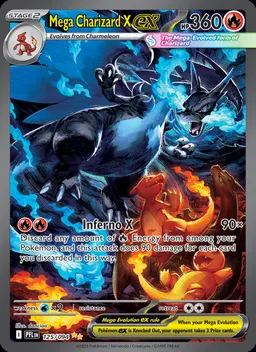
The November 2025 Mega Evolution era expansion, a Ghost and Fire themed set whose chase cards are its Mega ex line, Illustration and Special Illustration Rares.
The January 2025 Scarlet & Violet special expansion, led by Umbreon ex and the complete Eeveelution special illustration rare run.
A January 2026 special Mega Evolution era set, a large high-pull release headlined by its Mega ex and Special Illustration Rare chase cards.
The May 2025 Scarlet & Violet expansion, led by Team Rocket's Mewtwo ex, Cynthia's Garchomp ex, Ethan's Ho-Oh ex and Team Rocket's Moltres ex.
The September 2025 set that launched the Mega Evolution era, bringing Mega Evolution Pokemon back as the chase class alongside Illustration, Special Illustration and the new Mega Hyper Rare tiers.
The June 2023 Scarlet & Violet expansion. Magikarp, Iono, Tyranitar, Raichu and the leading Special Illustration Rare Pokemon ex cards lead the staged launch.
The August 2023 Scarlet & Violet expansion. Charizard ex, Ninetales, Pidgeot ex, Cleffa and Scizor lead the staged launch.
The July 2025 Scarlet & Violet special expansion focused on Unova, led by Zekrom ex, Victini, N's Plan, Kyurem ex and Genesect ex.
The May 2024 Scarlet & Violet expansion, led by Greninja ex, Eevee, Carmine, Perrin and Bloodmoon Ursaluna ex.
The July 2025 Scarlet & Violet special expansion focused on Unova, led by Reshiram ex, Victini, Hilda, Hydreigon ex and Keldeo ex.
The September 2024 Scarlet & Violet expansion, led by Terapagos ex, Squirtle, Bulbasaur, Lacey and Hydrapple ex.
The March 2025 Scarlet & Violet expansion, led by Lillie's Clefairy ex, N's Zoroark ex, Hop's Zacian ex and N's Reshiram.
The March 2024 Scarlet & Violet expansion. Walking Wake ex, Raging Bolt ex, Iron Crown ex, Gouging Fire ex and the leading illustration rares anchor the priority launch.
The November 2023 Scarlet & Violet expansion. Groudon, Roaring Moon ex, Iron Valiant ex, Garchomp ex and Steelix lead the staged launch.
The March 2026 Mega Evolution era expansion; chase cards are its Mega ex line and Special Illustration Rares.
The March 2023 base set introducing the Scarlet & Violet era. Miriam, Gardevoir ex, Miraidon ex and the gold Item cards lead the staged launch.
The August 2024 Scarlet & Violet special expansion, led by Earthen Vessel, Fezandipiti ex, Persian and the Duskull evolution line.
The May 2026 Mega Evolution era expansion and the newest set in the block; chase cards are its Mega ex and Special Illustration Rares.
The November 2024 Scarlet & Violet expansion, led by Pikachu ex, Latias ex, Milotic ex, Hydreigon ex and Lisia's Appeal.
The English-language set that started it all: Wizards of the Coast's 1999 release adapting Japan's first set, home to the iconic Charizard #4/102. Its print runs climb from scarce 1st Edition and Shadowless to Unlimited, which itself splits into 1999 and 1999-2000 Copyright variants, the most chased cards in vintage Pokemon.
The April 2000 villain-themed expansion introducing 'Dark' Pokemon like Dark Charizard and Dark Blastoise. It debuted the first secret rare in the English game, Dark Raichu (#83), numbered beyond the printed set total.
The third English set (October 1999), built around prehistoric and Fossil Pokemon such as Aerodactyl, Kabutops, and Dragonite, plus the legendary birds. The last of the three original Generation I expansions before the reprints began.
The October 2000 conclusion of the two-set Gym series and the final Generation I-themed English WOTC release, headlined by Giovanni's, Sabrina's, and Blaine's Pokemon. Closes out the Kanto Gym Leader storyline with chase cards like Blaine's Charizard.
The second English expansion (June 1999), spotlighting Generation I Kanto Pokemon like Snorlax, Scyther, and the Eeveelutions. Early 1st Edition copies were printed without the set symbol, creating the sought-after 'no symbol' error variants.
The August 2000 English opener of the Gym series, featuring Pokemon owned by Kanto Gym Leaders such as Brock, Misty, and Lt. Surge. The first time named trainers appeared on the cards themselves.
A February 2000 English reprint compilation that merged top cards from Base Set and Jungle into one Unlimited-only set. With no 1st Edition run, it is the more accessible way to own classic Generation I artwork.
The 53 Wizards Black Star promotional cards released from 1999 through 2002, including the movie promos, Birthday Pikachu, Ancient Mew and the Pokemon Center cards.
The two English Grey Star promotional cards distributed through Japan's CoroCoro Comic in April 1999. They are separated from the 34 Japanese-language CoroCoro promos so language-specific promo browsing stays accurate.
The first Japanese Pokemon Trading Card Game release (1996), home to vintage No Rarity Symbol (NRS) first prints and the foundational set that preceded all international releases. Charizard and Blastoise command the highest market values, particularly in NRS form.
The 1999 Japanese Gym Expansion 2, Challenge from the Darkness, featuring Pokemon owned by Sabrina, Koga, Blaine, and Giovanni. Its distinct 98-card checklist later contributed cards to the English Gym Challenge expansion.
The Team Rocket / Rocket Gang expansion (1997), the first set featuring Dark Pokemon cards. A defining vintage Japanese set with strong collector demand for high-grade copies.
The third Japanese expansion (1997), built around prehistoric and Fossil Pokemon such as Aerodactyl, Kabutops, and Dragonite, plus the legendary birds. A key set in the vintage Japanese market.
The second Japanese expansion (1997), spotlighting Generation I Kanto Pokemon such as Snorlax, Scyther, and the Eeveelutions. Japanese first edition copies are highly sought alongside their English-market counterparts.
The 1998 Japanese Gym Expansion 1, Leaders' Stadium, featuring Pokemon owned by Brock, Misty, Lt. Surge, and Erika. It has a distinct 96-card checklist and later contributed cards to the English Gym Heroes expansion.
The 35 Japanese-language cards in PSA's current 37-card registry of regular-size Pokemon promos distributed through CoroCoro Comic from November 1996 through May 2001. The two English Grey Star cards are cataloged separately with English promos.
A 125-card Japanese promotional collection distributed through vending machines in three 1998 Expansion Sheet series: Blue, Red, and Green. Full sheets, Series 00 previews, and Masaki mail-in promos are outside this set.
A five card Japanese promotional set distributed through the Communication Evolution mail order campaign, featuring holographic Alakazam, Machamp, Golem, Gengar, and Omastar cards.
The final set of the e-Card era and the last English release of the Wizards of the Coast run (2003). Its 144 cards are joined by a 32-card holo subset numbered H1-H32 and a closing run of Crystal-type chase cards headlined by the prized Crystal Charizard, with a reverse holo parallel across the set.
The fourth and final Generation II set (February 2002) and the last of the Wizards of the Coast era, headlined by the Light and Dark Pokemon and the chase Shining Pokemon secret rares.
A 2002 compilation set reprinting classic Base, Jungle, and Fossil Pokemon with new holographic artwork, best known for its distinctive reverse-holo parallels.
The first Generation II set (December 2000), opening the Neo era with Johto Pokemon, Baby Pokemon, and the new Darkness and Metal types. Headlined by Lugia.
The second e-Card set (2002), a 147-card release built for the Nintendo e-Reader. Beyond the main set it carries a 32-card holo subset numbered H1-H32 and closes with the era's first Crystal-type chase cards, and every card has a reverse holo parallel.
The third Generation II set (September 2001), best known for debuting the first Shining Pokemon as secret rares.
The September 2002 debut of the e-Card era, the first English set built for the Nintendo e-Reader with its signature dot-code strips printed along the card edges. A 165-card mix of Generation I and II Pokemon carrying the reverse holo parallel, headlined by chase holos like Charizard, Feraligatr, and Typhlosion.
The second Generation II set (June 2001), continuing the Neo era with a wave of new Johto Pokemon.
A 2001 special collection of 18 tropical-themed cards sold as two nine-card sets, prized for its exclusive panoramic artwork. A single print run with no 1st Edition.
A nine-card promotional set distributed through Pokemon League events, with Winner-stamped versions of cards including Rocket's Mewtwo and Dark Venusaur.
The first Japanese Neo expansion (1999), introducing the Johto generation and landmark cards such as Lugia, Typhlosion, Feraligatr, Meganium, and the first Baby Pokemon.
The third Japanese neo Era expansion (2000), introducing Shining Pokemon and bringing Raikou, Entei, Suicune, Ho-Oh, and Celebi together in one 57-card release.
The second Japanese Neo expansion (2000), known as Crossing the Ruins. Its 57-card roster explores the Ruins of Alph with six Unown forms, Umbreon, Espeon, Tyranitar, and secret Dark Raichu.
The May 2006 EX-era set continuing the Holon research storyline with a large Delta Species roster. Chase cards are the holo-rare line, the Pokemon-ex and the Gold Star cards (Gyarados, Mewtwo, Pikachu).
The November 2006 EX-era set built almost entirely from Delta Species Dragon-type Pokemon. Its Gold Star Charizard is the most sought-after card of the whole EX run, alongside Gold Star Mew and the Delta Species Pokemon-ex.
The November 2004 set reviving Team Rocket's Dark Pokemon and the debut of the gold-star chase rarity. Chase cards are the holo-rare line, the Rocket's Pokemon-ex and the gold-star cards (Pikachu, Mewtwo).
The February 2005 EX-era set built around Deoxys forms and the Destiny Deoxys tie-in. Chase cards are the holo-rare line, Pokemon-ex and the Gold Star cards (Latias, Latios, Rayquaza).
The August 2005 EX-era set pairing Johto favorites with a large Unown subset and a Pokeball reverse-holo pattern. Chase cards are the Pokemon-ex line and the Gold Star legendary beasts (Entei, Raikou, Suicune).
The September 2004 Kanto-themed set tied to the FireRed and LeafGreen games. Chase cards are the holo-rare line, the Pokemon-ex (Charizard, Blastoise, Venusaur ex) and the secret-rare cards.
The October 2005 EX-era set introducing Delta Species Pokemon with alternate typing. Chase cards are the holo-rare line, Eeveelution Pokemon-ex and the Gold Star cards (Groudon, Kyogre, Metagross).
The August 2006 EX-era set pairing the Hoenn starters with Delta Species reprints of the Kanto starter lines. Chase cards are the holo-rare line, the Pokemon-ex and the Gold Star cards (Alakazam, Celebi).
The November 2003 set built around Dragon-type Pokemon. Chase cards are the holo-rare line and the Pokemon-ex (Flygon, Salamence, Latias ex, Latios ex).
The February 2007 set that closed the EX era, reprinting earlier Hoenn cards to keep them tournament legal. Chase cards are the holo-rare line, the Pokemon-ex and the Gold Star Eeveelutions (Flareon, Jolteon, Vaporeon).
The February 2006 EX-era set built on the Legendary Pokemon of Hoenn, closing the Delta Species arc. Chase cards are the holo-rare line, the Pokemon-ex and the Gold Star Regi trio (Regice, Regirock, Registeel).
The May 2005 EX-era set centered on Generation III Pokemon and holographic Basic Energy cards. Chase cards are the holo-rare line and the Pokemon-ex, including Milotic ex and the Regi trio.
The July 2003 set that launched the EX era, the first English expansion built around powerful Pokemon-ex (with a knockout drawback) and the debut of reverse-holo parallels across the set. Chase cards are the holo-rare line (Blaziken, Gardevoir, Kabutops) and the Pokemon-ex.
The second EX-era set (September 2003), themed around Ground, Rock and Water Pokemon. Chase cards are the holo-rare line and the Pokemon-ex (Aggron, Gardevoir, Wailord ex).
The March 2004 set splitting cards between the villainous Team Magma and Team Aqua factions. Chase cards are the holo-rare line and the Team Magma's / Team Aqua's Pokemon-ex.
The fifth 17-card Pokemon Organized Play promotional series, home to Umbreon Gold Star, Espeon Gold Star, Lugia, Ho-Oh and Mew.
The 40 Nintendo Black Star promotional cards released from 2003 through 2006, spanning the EX era from Kyogre ex and Groudon ex through Mew.
The third 17-card Pokemon Organized Play promotional series, featuring Blastoise and the original Eeveelutions.
The fourth 17-card Pokemon Organized Play promotional series, featuring Mew, Deoxys and Flygon.
The first 17-card Pokemon Organized Play promotional series, led by Blaziken, Metagross, Rayquaza and Tyranitar ex.
The second 17-card Pokemon Organized Play promotional series, featuring Entei, Raikou, Suicune and Venusaur.
The November 2010 finale of the HeartGold & SoulSilver block. Gengar, Mew and the two LEGEND pairs lead the staged launch.
The August 2010 HeartGold & SoulSilver expansion. Umbreon, Espeon, Rayquaza & Deoxys LEGEND and Kyogre & Groudon LEGEND lead the staged launch.
The February 2011 standalone set closing the HGSS era. Its eleven Shiny Legendary cards, led by Lugia, Rayquaza and Suicune, lead the staged launch.
The August 2009 Platinum expansion with an unusually deep secret-rare and shiny roster. Charizard G LV.X, the legendary birds and Rayquaza lead the staged launch.
The November 2007 Diamond & Pearl set, the largest of the early Generation IV run. Chase cards are the Pokemon LV.X pair (Gardevoir, Honchkrow) and the holo-rare line including Ho-Oh and Mew.
The November 2008 finale of the Diamond & Pearl block, featuring retro-styled secret rares and major LV.X cards. Charizard and its evolution line lead the staged launch.
The November 2009 finale of the Platinum block, centered on the nine Arceus subset cards. Gengar, Salamence and the shiny Pokemon lead the staged launch.
The February 2010 base set for the HeartGold & SoulSilver block. Lugia LEGEND, Ho-Oh LEGEND, the Pokemon Prime cards and the secret Gyarados lead the staged launch.
The May 2008 Diamond & Pearl set that brought Leafeon and Glaceon into the trading card game, led by their prints and the LV.X run that closes the checklist.
The May 2007 set that opened the Diamond & Pearl era and introduced Generation IV Pokemon to the TCG. It debuts the Pokemon LV.X chase rarity (Empoleon, Infernape, Torterra) and makes reverse holo a standard parallel for every non-holo card.
The February 2008 Diamond & Pearl set tied to the Sinnoh legendary trio. It carries the densest LV.X run of the era (Cresselia, Darkrai, Dialga, Palkia), which are its chase cards alongside the holo-rare line.
The May 2009 Platinum expansion built around Gym Leaders and Elite Four Pokemon SP. Snorlax, Luxray and Infernape LV.X plus the Pikachu secret rares lead the staged launch.
The May 2010 HeartGold & SoulSilver expansion. The three LEGEND pairs, Tyranitar Prime, Steelix Prime and the remaining Pokemon Prime cards lead the staged launch.
The August 2008 Diamond & Pearl expansion led by legendary Pokemon and a deep LV.X roster. The staged launch prioritizes its most valuable LV.X, holo and Ditto cards.
The August 2007 Diamond & Pearl set expanding the Sinnoh roster with Johto reprints. Chase cards are the Pokemon LV.X line (Electivire, Lucario, Magmortar) and the secret rare Time-Space Distortion trainer.
The February 2009 base set for the Platinum block, introducing Pokemon SP and a new LV.X lineup. Giratina, Dialga, Palkia, Shaymin and shiny Vulpix lead the staged launch.
The ninth and final 17-card Pokemon Organized Play promotional series, featuring Garchomp, Manaphy, Raichu and Regigigas.
The sixth 17-card Pokemon Organized Play promotional series, featuring Lucario, Manaphy and Pikachu.
The eighth 17-card Pokemon Organized Play promotional series, featuring Heatran, Lucario, Luxray and Yanmega.
The seventh 17-card Pokemon Organized Play promotional series, featuring Ampharos, Gallade, Latias and Latios.
The February 2013 Team Plasma expansion featuring secret rare Charizard and Blastoise, full art Lugia EX, Articuno EX and Colress.
The November 2013 era finale and Radiant Collection, featuring full art Zekrom, Reshiram, Mew EX, Emolga and Pikachu.
The August 2012 Dragon-focused expansion led by secret Rayquaza, full art Giratina EX, Mew EX, Rayquaza EX and Ho-Oh EX.
The April 2011 Black & White base expansion introducing the Unova region, led by full art Reshiram and Zekrom plus the secret rare Pikachu.
The May 2013 Team Plasma expansion led by secret Ultra Ball and Garchomp, full art Deoxys EX, Latios EX and Professor Juniper.
The May 2012 expansion featuring full art Darkrai EX, Groudon EX, Raikou EX, Entei EX and Kyogre EX plus golden secret rares.
The August 2013 expansion featuring full art Palkia EX, Dialga EX, Genesect EX and Jirachi EX plus golden Rare Candy and Dusknoir.
The February 2012 expansion introducing Pokemon-EX to the era, led by full art Mewtwo EX, Zekrom EX, Reshiram EX, Kyurem EX and secret rares.
The November 2012 expansion introducing ACE SPEC cards, led by full art Black Kyurem EX, White Kyurem EX, Skyla and Bianca plus golden secret rares.
The November 2011 expansion featuring full art N, Victini, Cobalion, Virizion and Terrakion plus the secret rare Meowth.
The August 2011 expansion featuring full art Thundurus and Tornadus, Zoroark, Pokemon Catcher and the forces shaping the Unova region.
The October 2012 all-holo mini expansion featuring Kyurem, Rayquaza, Dragonite, Latias and Latios.
The November 2016 finale revisiting the original card designs, led by full art M Charizard EX, holo Charizard, M Blastoise EX, Dragonite EX and Mewtwo EX.
The August 2015 expansion featuring shiny M Rayquaza EX, Primal Kyogre EX, Primal Groudon EX, Lugia EX and Giratina EX.
The February 2016 anniversary expansion and Radiant Collection, featuring full art Flareon EX, Sylveon EX, Pikachu, M Gardevoir EX and M Charizard EX.
The November 2014 expansion led by secret Dialga EX and M Gengar EX, full art Gengar EX, M Manectric EX and the debut of Pokemon Tool F cards.
The February 2016 expansion featuring secret Gyarados EX, M Gyarados EX, Espeon EX, Darkrai EX, Skyla and Scizor EX.
The May 2014 expansion centered on Charizard, including four major Charizard EX and Mega Charizard EX treatments plus full art Trainers.
The May 2016 expansion featuring secret Alakazam EX, full art Umbreon EX and M Alakazam EX, Glaceon EX, Lugia BREAK and Snorlax.
The November 2015 expansion led by secret and full art Mewtwo EX cards, M Houndoom EX, Gengar and full art Brigette.
The May 2015 expansion centered on Rayquaza, led by full art M Rayquaza EX and Rayquaza EX, M Latios EX, Winona and Shaymin EX.
The March 2015 Team Aqua and Team Magma mini-set, led by full art Team Aqua's Kyogre EX and Team Magma's Groudon EX.
The August 2016 expansion featuring secret Gardevoir EX and Volcanion EX, full art M Gardevoir EX, M Steelix EX and Professor Sycamore.
The February 2015 expansion featuring full art Primal Kyogre EX and Primal Groudon EX, Kyogre EX, Groudon EX and M Gardevoir EX.
The February 2014 XY base expansion introducing Pokemon-EX and Mega Evolution, led by full art Blastoise EX, Xerneas EX, Venusaur EX and Yveltal EX.
The August 2014 Fighting-focused expansion featuring secret M Lucario EX and M Heracross EX, full art Lucario EX, Dragonite EX and Korrina.
The November 2013 introductory Kalos set featuring Chespin, Fennekin, Froakie, Greninja, Snorlax and the first English Fairy-type cards.
The February 2019 expansion that introduced TAG TEAM Pokemon-GX, led by Latias and Latios GX, Gengar and Mimikyu GX, and Pikachu and Zekrom GX.
The October 2017 special expansion featuring Mewtwo GX Secret Shining, Shining Mew, Shining Rayquaza and Shining Jirachi.
The August 2019 expansion featuring Mewtwo and Mew GX, Giratina and Garchomp GX, Raichu and Alolan Raichu GX, and Misty's Favor.
The May 2019 expansion headlined by Reshiram and Charizard GX, Blastoise GX, Gardevoir and Sylveon GX, and full art Red's Challenge.
The November 2019 Sun & Moon finale, featuring alternate art Arceus, Dialga and Palkia GX, Blastoise and Piplup GX, Solgaleo and Lunala GX, and character rares.
The August 2017 expansion headlined by rainbow Charizard GX, Acerola, Wicke, Darkrai GX and Gardevoir GX.
The February 2018 expansion led by Lillie, Cynthia, Lusamine, Leafeon GX, Glaceon GX and the Prism Star mechanic.
The February 2017 Sun & Moon base expansion featuring Umbreon GX, Espeon GX, Lillie, Solgaleo GX and Lunala GX.
The November 2018 expansion led by rainbow Lugia GX, Zeraora GX, Tyranitar GX, Suicune GX and full art Professor Elm's Lecture.
The August 2018 expansion headlined by rainbow Rayquaza GX, Lisia, Scizor GX, Blaziken GX and Articuno GX.
The May 2017 expansion led by Sylveon GX, Alolan Ninetales GX, Tapu Lele GX, Mallow and the Alola guardians.
The November 2017 expansion featuring rainbow Gyarados GX, Lusamine, Olivia, Gladion and the Ultra Beasts.
The September 2018 special expansion featuring rainbow Reshiram GX, Dragonite GX, Salamence GX, White Kyurem GX and gold Ultra Necrozma GX.
The May 2018 expansion featuring rainbow Lucario GX, Greninja GX, Dialga GX, Ultra Necrozma GX and Diantha.
The April 2019 movie tie-in mini-set featuring Detective Pikachu, Charizard, Mewtwo, Greninja and Ditto.
The August 2021 Sword & Shield expansion led by alternate art Umbreon VMAX, Rayquaza VMAX, Dragonite V and the Eeveelutions.
The January 2023 Sword & Shield finale and Galarian Gallery, led by Giratina VSTAR, Mewtwo VSTAR, Arceus VSTAR, Dialga VSTAR and Palkia VSTAR.
The November 2021 Sword & Shield expansion headlined by alternate art Gengar VMAX, Espeon VMAX, Mew VMAX and Celebi V.
The September 2022 Sword & Shield expansion and Trainer Gallery, led by alternate art Giratina V, Aerodactyl V, Pikachu V and Pikachu VMAX.
The November 2022 Sword & Shield expansion and Trainer Gallery, featuring alternate art Lugia V, Rayquaza VMAX, Blaziken VMAX and Unown V.
The October 2021 anniversary expansion and Classic Collection, featuring Charizard, Umbreon Gold Star, Mew, Shining Magikarp and legacy favorites.
The February 2022 Sword & Shield expansion and Trainer Gallery, led by alternate art Charizard V, Umbreon VMAX, Mimikyu V and Arceus V.
The September 2020 special expansion featuring Rainbow Charizard VMAX, Shiny Charizard V, Gardevoir VMAX and Drednaw VMAX.
The June 2021 Sword & Shield expansion featuring alternate art Blaziken VMAX, Galarian Moltres V, Snorlax and the Calyrex forms.
The May 2022 Sword & Shield expansion and Trainer Gallery, featuring alternate art Machamp V, Starmie V, Palkia V, Garchomp V and Dialga V.
The February 2021 special expansion and Shiny Vault, led by Shiny Charizard VMAX, Suicune, Skyla, Eternatus VMAX and Ditto VMAX.
The November 2020 Sword & Shield expansion led by Rainbow Pikachu VMAX, Rayquaza, Jirachi, Lugia, Bea and Nessa.
The March 2021 Sword & Shield expansion featuring Tyranitar V, Rapid Strike Urshifu VMAX, Single Strike Urshifu VMAX and Empoleon V.
The July 2022 special expansion based on Pokemon GO, featuring alternate art Mewtwo V, Mewtwo VSTAR, Dragonite VSTAR and Radiant Charizard.
The August 2020 Sword & Shield expansion headlined by Charizard VMAX, Houndoom V, Scizor VMAX and Salamence VMAX.
The February 2020 Sword & Shield base expansion, led by Marnie, Snorlax VMAX, Zacian V, Zamazenta V and Lapras VMAX.
The May 2020 Sword & Shield expansion featuring Boss's Orders, Sonia, Frosmoth, Galarian Perrserker and Ninetales V.
A modern English Scarlet & Violet era special set (September 2023) revisiting the original 151 Kanto Pokemon in National Pokedex order. Its blend of nostalgic subjects with current print quality and chase Special Illustration Rares makes it the contemporary counterpart to the vintage WOTC sets.
The January 2024 Scarlet & Violet special expansion. Ninety-one numbered cards sit over a 154-card shiny run, and its Shiny Charizard ex is the set's chase card.
The November 2025 Mega Evolution era expansion, a Ghost and Fire themed set whose chase cards are its Mega ex line, Illustration and Special Illustration Rares.
The January 2025 Scarlet & Violet special expansion, led by Umbreon ex and the complete Eeveelution special illustration rare run.
A January 2026 special Mega Evolution era set, a large high-pull release headlined by its Mega ex and Special Illustration Rare chase cards.
The May 2025 Scarlet & Violet expansion, led by Team Rocket's Mewtwo ex, Cynthia's Garchomp ex, Ethan's Ho-Oh ex and Team Rocket's Moltres ex.
The September 2025 set that launched the Mega Evolution era, bringing Mega Evolution Pokemon back as the chase class alongside Illustration, Special Illustration and the new Mega Hyper Rare tiers.
The June 2023 Scarlet & Violet expansion. Magikarp, Iono, Tyranitar, Raichu and the leading Special Illustration Rare Pokemon ex cards lead the staged launch.
The August 2023 Scarlet & Violet expansion. Charizard ex, Ninetales, Pidgeot ex, Cleffa and Scizor lead the staged launch.
The July 2025 Scarlet & Violet special expansion focused on Unova, led by Zekrom ex, Victini, N's Plan, Kyurem ex and Genesect ex.
The May 2024 Scarlet & Violet expansion, led by Greninja ex, Eevee, Carmine, Perrin and Bloodmoon Ursaluna ex.
The July 2025 Scarlet & Violet special expansion focused on Unova, led by Reshiram ex, Victini, Hilda, Hydreigon ex and Keldeo ex.
The September 2024 Scarlet & Violet expansion, led by Terapagos ex, Squirtle, Bulbasaur, Lacey and Hydrapple ex.
The March 2025 Scarlet & Violet expansion, led by Lillie's Clefairy ex, N's Zoroark ex, Hop's Zacian ex and N's Reshiram.
The March 2024 Scarlet & Violet expansion. Walking Wake ex, Raging Bolt ex, Iron Crown ex, Gouging Fire ex and the leading illustration rares anchor the priority launch.
The November 2023 Scarlet & Violet expansion. Groudon, Roaring Moon ex, Iron Valiant ex, Garchomp ex and Steelix lead the staged launch.
The March 2026 Mega Evolution era expansion; chase cards are its Mega ex line and Special Illustration Rares.
The March 2023 base set introducing the Scarlet & Violet era. Miriam, Gardevoir ex, Miraidon ex and the gold Item cards lead the staged launch.
The August 2024 Scarlet & Violet special expansion, led by Earthen Vessel, Fezandipiti ex, Persian and the Duskull evolution line.
The May 2026 Mega Evolution era expansion and the newest set in the block; chase cards are its Mega ex and Special Illustration Rares.
The November 2024 Scarlet & Violet expansion, led by Pikachu ex, Latias ex, Milotic ex, Hydreigon ex and Lisia's Appeal.
Shining Noctowl #110Neo Destiny · PSA 8$1,355↑152.3%
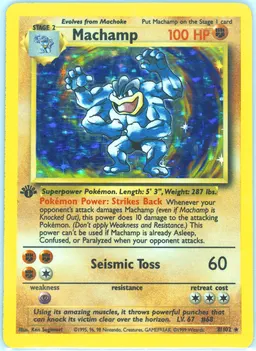
Machamp #8Base Set · PSA 10$5,606↑116.7%

Shining Raichu #111Neo Destiny · PSA 7$1,147↑87.7%
Lugia #2POP Series 5 · PSA 9$2,261↑80.5%Each set rolls up the confidence-weighted TCGBerg fair value of every tracked atom (printing x grader x grade) times its graded population. Cap momentum is the trailing 30-day move in that rollup, a function of both price and coverage, not a pure price index. Confidence reflects the depth of recent sales behind each fair value. All values are USD-denominated and refreshed weekly.
READ THE FULL METHODOLOGYMarket cap is implied: graded population x fair value per grade, summed across every tracked card in the set. Read the methodology