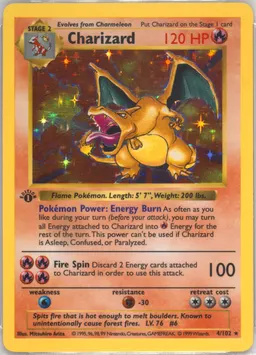
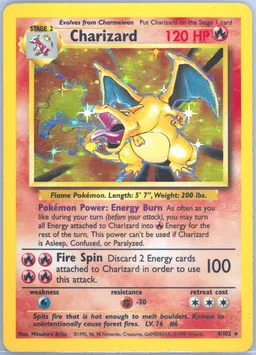
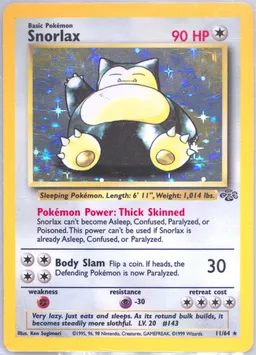
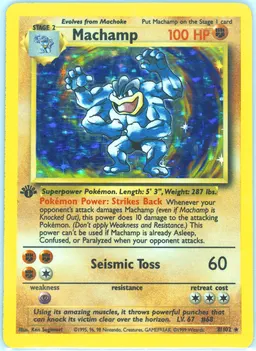
Should you grade it? Pick a card, say what shape it is in, and get what you would clear after every cost, your odds at each PSA grade, and the most you could pay before grading stops paying for itself. Too few graded copies to judge? We say so.
Pick a card. See what grading it would actually clear.
Suppose 20% of outcomes sell for $300 and 80% for $110. The weighted sale value is $148. After a 10% selling fee, that leaves $133.20, or $18.20 above the $115 cost.
The lower outcome loses $16 after fees. Positive expected profit does not mean your individual card will be profitable.
Illustrative USD inputs, not current fees, prices or this card’s measured grade probabilities. The live calculator uses the selected card’s population, available prices and fee assumptions. Population is not a guarantee of your grade.
Every number in the tool is explained below, and each one carries the same explanation on its info icon.
The method
What is the one number I should take away?
What you would clear by buying a raw copy at today’s market price, grading it and selling it, after every cost. It is an average over many copies rather than a forecast of yours.Underneath it sits the break-even price, the most you could pay before grading stops paying for itself; that one belongs to the card rather than to any listing, so it holds still while the price you test moves.
Which costs are subtracted?
The PSA fee for the service level this card is eligible for, postage to PSA, insured return postage, the marketplace fee on the sale, and postage out to the buyer. That marketplace fee is the real tiered schedule, not a flat percentage.A fee-only calculator, which skips the postage and the selling fee, overstates profit on a typical card by more than half.
Where do the odds come from, and how far can I trust them?
PSA’s own population report for that exact card: the share of every copy ever graded that came back at each grade. A real base rate rather than a guess, with two limits. It is not a scan of your card, so it says nothing about the centring or the edge you are holding.And it is self-selected, because collectors send in their better copies, so it runs optimistic. We label that rather than quietly correcting for it: telling us the card is played is what shifts the whole distribution down the ladder instead.
Why does a grade sometimes show "no sales"?
Because we will not price an outcome we have no evidence for. PSA publishes fair values only for the whole grades from 6 to 10, so the lower rungs and the half grades usually have none. Those grades count as zero toward the expected value, which is deliberately conservative: it can understate the profit, never overstate it.When a large share of the likely outcomes is unpriced the tool drops the evidence rating rather than printing a caveat, because whether to trust the figure is the actual question and a footnote is a poor place to answer it.
What does "buy one already graded" mean?
Somebody is asking less for a slabbed copy than it would cost you to buy this one raw and grade it yourself, and you would take none of the risk of missing the grade. Read from the cheapest clean asking price we track at each grade.
Why does it refuse to answer for some cards?
Below roughly fifty graded copies the distribution is noise rather than signal: one more PSA 10 would swing the odds by percentage points. Rather than dress that up as precision, the tool says it cannot judge the card.
Why does the board rank by return instead of by expected profit?
Because expected profit in dollars rewards expensive cards for being expensive. A $4,000 card with a five percent edge would outrank a $40 card that doubles your money, which is not what someone asking "what should I be grading?" wants to see.So the default list ranks by return on what the whole submission ties up: the card plus the grading fee and postage both ways. Not headroom over the card price alone, which leaves that fee out of the denominator while the profit still subtracts it, and once printed a real 158% return as 7599%. The expected-profit board is one click away for when you want the biggest cheque instead of the best ratio.
What does "not worth grading" mean if I already own the card?
It means grading is expected to destroy value at today’s raw price: the most you should pay is less than the card already costs. If you own one, you net more selling it as it is than paying to slab it.That usually happens when the PSA 10 barely beats the PSA 9, so the upside does not pay for the risk of missing it.
Is this investment advice?
No. It prices the average outcome across many cards, and grading a single card is a gamble. The model can be right about a hundred submissions and still be wrong about the one in your hand.
Population data is sourced from PSA; grading and postage costs are modelled and change over time. Figures are estimates for research, not investment advice.