










PSA 9 vs PSA 10: what the price gap really tells you
Three Base Set cards show a large gap between grades. The confidence behind those estimates matters just as much as the headline value.
TCGBerg Research Desk
Published 4 MIN read
The gap between PSA 9 and PSA 10 can be much larger than the one-point label suggests. In our snapshot of three English Base Set Unlimited cards, the PSA 10 model estimate was roughly five to ten times the PSA 9 estimate. The evidence supporting those estimates was also uneven.
For someone buying an ungraded card, the practical lesson is to compare several possible grades before deciding what to pay. A high top-grade estimate describes one graded outcome. It does not value the raw copy in front of you.
The same card, a very different estimate
We compared Charizard, Blastoise and Venusaur in the same English Base Set Unlimited printing. Keeping the edition fixed matters: a First Edition or Shadowless copy is a different comparison.
| Card | PSA 9 estimate | PSA 10 estimate | Multiple | PSA 10 confidence |
|---|---|---|---|---|
| Charizard | $3,467 | $18,641 | 5.4× | 70/100 |
| Blastoise | $1,024 | $10,467 | 10.2× | 31/100 |
| Venusaur | $617 | $3,310 | 5.4× | 78/100 |
All dollar figures are TCGBerg modelled fair values in USD from the September 6, 2026 snapshot, rounded to whole dollars. They are estimates, rather than asking prices or executable offers. Multiples use the unrounded values. The confidence score describes the model's supporting evidence on a scale up to 100; it is not the chance that you can sell at that price.
Charizard and Venusaur each had a PSA 10 estimate about five times their PSA 9 estimate. Blastoise's multiple was larger, but its top-grade confidence score was much lower. That makes the largest multiple the one that needs the most care when interpreting this table.
Read the evidence beside the headline number
Blastoise illustrates the distinction. Its PSA 10 model estimate was $10,467, with confidence of 31 out of 100. The most recent sale carried by that card's API snapshot was $7,500 on August 26, 2026.
Those figures answer different questions. One is a model estimate dated after the sale; the other is a recorded transaction for a particular copy. Their difference is a reason to inspect comparable sales and the model's evidence. It does not establish a bargain, an error, or a price someone will pay today.
The PSA 9 confidence scores were higher for all three cards in this snapshot. A smaller headline value can come with stronger supporting evidence.
What a raw-card buyer can do with this
PSA defines its highest grade around exceptional condition, with requirements covering the card's surface, corners and centering. A card that looks attractive in a listing still needs close inspection. Read the PSA grading standards alongside clear photographs of the actual copy.
Before buying with the intention of grading, write down the purchase price, grading expense, shipping, insurance and selling costs. Compare the resulting proceeds across plausible grades. An appealing result that depends entirely on the highest grade deserves particular scrutiny.
The grading calculator lets you explore the supported grade outcomes and stated costs for a card. Its population-based assumptions are a model, not an assessment of the physical copy you own. Readers comparing already graded copies can start with Charizard, Blastoise or Venusaur.
How we studied it
We selected the three Base Set starter evolutions before retrieving their public card responses on September 6, 2026. All were English Unlimited printings. We compared the PSA 9 and PSA 10 fair-value fields and their confidence scores in each response.
For each card, the multiple equals the PSA 10 estimate divided by the PSA 9 estimate. We used the unrounded decimal values for the calculation, then rounded the multiple to one decimal place for display. No currency conversion or grading-fee assumption enters that comparison.
The frozen study data contains the input values, source URLs, data dates and calculation. A CSV version is available for checking the table in a spreadsheet. Our fair-value methodology explains the underlying estimates.
What this study cannot tell us
This is a selected case study of three well-known vintage cards, not a representative sample of the Pokémon market. It does not establish a typical premium for modern cards, other editions or other graders.
We have compared model estimates rather than a matched sample of individual sales. We have not measured the condition or raw market value of any particular ungraded copy. The table cannot establish whether grading that copy will be profitable, predict its grade, or explain what caused the observed premium.
The article and downloadable data stay fixed to the study date. Linked card pages show newer market information as it becomes available.
Follow the cards in this study
The panel below shows current market context and may differ from the frozen comparison above. Open a card to inspect its available evidence or add it to your watchlist.
Cards in this story
| Card | Ticker | Fair value | 30D | Pop | Watch |
|---|---|---|---|---|---|
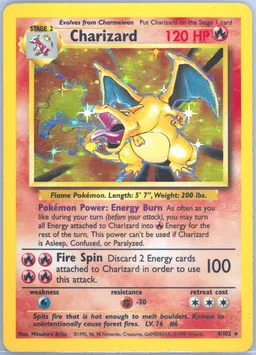 Charizard #4Base Set Charizard #4Base Set | BAS4:EN | $3,595 | 3.0% | 8,474 | |
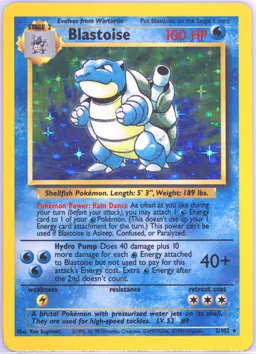 Blastoise #2Base Set Blastoise #2Base Set | BAS2:EN | $1,006 | 2.0% | 4,938 | |
 Venusaur #15Base Set Venusaur #15Base Set | BAS15:EN | $597 | 3.2% | 5,778 |
Frequently asked
Does the PSA 10 estimate value an ungraded card?
Is the confidence score a probability of selling at that price?
Does this premium apply to all Pokémon cards?
Article figures are fixed to the stated study date. Linked card pages and the market panels show newer data when available. TCGBerg fair values are modelled estimates with a sales-evidence rating, not quotes. Nothing here is financial advice. How fair value is computed. More from Research.